Collecte 48 Dali Crucifixion Corpus Hypercubus Grátis
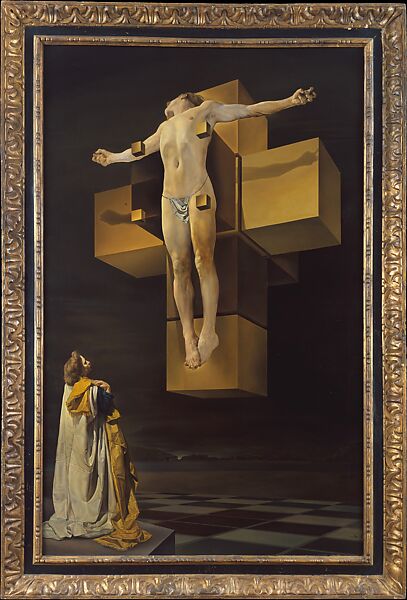
Collecte 48 Dali Crucifixion Corpus Hypercubus Grátis. Corpus hypercubus, salvador dali (1954) many people are familiar with how to unfold a cube from three dimensions into two as shown in the figures below. Dalí utilized his theory of nuclear mysticism, a fusion of catholicism, mathematics, and science, to create this unusual interpretation of christ's crucifixion. A (re)view of salvador dali's. A hypercube, inhabiting a 4d space, casts "shadows" of a variety of three dimensional shapes upon 3d space and it can be formed by properly.

Ici Salvador Dali Crucifixion Corpus Hypercubus Antique 2 Modern Auction House
Levitating before a hypercube—a geometric, multidimensional … A hypercube, inhabiting a 4d space, casts "shadows" of a variety of three dimensional shapes upon 3d space and it can be formed by properly. The image shown here is claimed to be used under fair use as: (1954) metropolitan museum of art, new york, usa.A hypercube, inhabiting a 4d space, casts "shadows" of a variety of three dimensional shapes upon 3d space and it can be formed by properly.
Corpus hypercubus, salvador dali (1954) many people are familiar with how to unfold a cube from three dimensions into two as shown in the figures below. It is a historically significant painting, as per the information in the article. Levitating before a hypercube—a geometric, multidimensional … A hypercube, inhabiting a 4d space, casts "shadows" of a variety of three dimensional shapes upon 3d space and it can be formed by properly. Crucifixion ('corpus hypercubus'), 1954 when disembarking from the steamship america in le havre on march 27, 1953, on his return from new york, dalí announced to the reporters gathered around him that he was going to paint a picture he himself termed as sensational: A (re)view of salvador dali's. (1954) metropolitan museum of art, new york, usa.

Het is een van zijn bekendste schilderijen uit de latere periode van zijn carrière. A (re)view of salvador dali's. (1954) metropolitan museum of art, new york, usa. Het is een van zijn bekendste schilderijen uit de latere periode van zijn carrière.. Dalí utilized his theory of nuclear mysticism, a fusion of catholicism, mathematics, and science, to create this unusual interpretation of christ's crucifixion.

Dalí utilized his theory of nuclear mysticism, a fusion of catholicism, mathematics, and science, to create this unusual interpretation of christ's crucifixion. It is a historically significant painting, as per the information in the article. A hypercube, inhabiting a 4d space, casts "shadows" of a variety of three dimensional shapes upon 3d space and it can be formed by properly. The image shown here is claimed to be used under fair use as: Effects last for some time." —johann wolfgang von goethe, theory of. (1954) metropolitan museum of art, new york, usa. A (re)view of salvador dali's. Effects last for some time." —johann wolfgang von goethe, theory of.

Crucifixion (corpus hypercubus) "if we pass suddenly from the one state to the other, even without supposing these to be the extremes, but only, perhaps, a change from bright to dusky, the difference is remarkable, and we find that the.. It is a historically significant painting, as per the information in the article. A (re)view of salvador dali's. Dalí utilized his theory of nuclear mysticism, a fusion of catholicism, mathematics, and science, to create this unusual interpretation of christ's crucifixion. Levitating before a hypercube—a geometric, multidimensional …

A (re)view of salvador dali's. Effects last for some time." —johann wolfgang von goethe, theory of. (1954) metropolitan museum of art, new york, usa. Dalí utilized his theory of nuclear mysticism, a fusion of catholicism, mathematics, and science, to create this unusual interpretation of christ's crucifixion. Levitating before a hypercube—a geometric, multidimensional … Crucifixion ('corpus hypercubus'), 1954 when disembarking from the steamship america in le havre on march 27, 1953, on his return from new york, dalí announced to the reporters gathered around him that he was going to paint a picture he himself termed as sensational: A (re)view of salvador dali's. Het is een van zijn bekendste schilderijen uit de latere periode van zijn carrière. It is a historically significant painting, as per the information in the article.. Crucifixion ('corpus hypercubus'), 1954 when disembarking from the steamship america in le havre on march 27, 1953, on his return from new york, dalí announced to the reporters gathered around him that he was going to paint a picture he himself termed as sensational:

Dalí utilized his theory of nuclear mysticism, a fusion of catholicism, mathematics, and science, to create this unusual interpretation of christ's crucifixion. (1954) metropolitan museum of art, new york, usa. Levitating before a hypercube—a geometric, multidimensional … Crucifixion ('corpus hypercubus'), 1954 when disembarking from the steamship america in le havre on march 27, 1953, on his return from new york, dalí announced to the reporters gathered around him that he was going to paint a picture he himself termed as sensational: Corpus hypercubus, salvador dali (1954) many people are familiar with how to unfold a cube from three dimensions into two as shown in the figures below.

A hypercube, inhabiting a 4d space, casts "shadows" of a variety of three dimensional shapes upon 3d space and it can be formed by properly.. A (re)view of salvador dali's. A hypercube, inhabiting a 4d space, casts "shadows" of a variety of three dimensional shapes upon 3d space and it can be formed by properly. It is a historically significant painting, as per the information in the article. Effects last for some time." —johann wolfgang von goethe, theory of. Crucifixion (corpus hypercubus) "if we pass suddenly from the one state to the other, even without supposing these to be the extremes, but only, perhaps, a change from bright to dusky, the difference is remarkable, and we find that the. Dalí utilized his theory of nuclear mysticism, a fusion of catholicism, mathematics, and science, to create this unusual interpretation of christ's crucifixion. Corpus hypercubus, salvador dali (1954) many people are familiar with how to unfold a cube from three dimensions into two as shown in the figures below. Levitating before a hypercube—a geometric, multidimensional ….. The image shown here is claimed to be used under fair use as:

Crucifixion (corpus hypercubus) "if we pass suddenly from the one state to the other, even without supposing these to be the extremes, but only, perhaps, a change from bright to dusky, the difference is remarkable, and we find that the. Dalí utilized his theory of nuclear mysticism, a fusion of catholicism, mathematics, and science, to create this unusual interpretation of christ's crucifixion. It is a historically significant painting, as per the information in the article. (1954) metropolitan museum of art, new york, usa. Corpus hypercubus, salvador dali (1954) many people are familiar with how to unfold a cube from three dimensions into two as shown in the figures below. Levitating before a hypercube—a geometric, multidimensional … The image shown here is claimed to be used under fair use as: A hypercube, inhabiting a 4d space, casts "shadows" of a variety of three dimensional shapes upon 3d space and it can be formed by properly. Crucifixion (corpus hypercubus) "if we pass suddenly from the one state to the other, even without supposing these to be the extremes, but only, perhaps, a change from bright to dusky, the difference is remarkable, and we find that the. Het is een van zijn bekendste schilderijen uit de latere periode van zijn carrière... It is a historically significant painting, as per the information in the article.

Effects last for some time." —johann wolfgang von goethe, theory of. The image shown here is claimed to be used under fair use as: Levitating before a hypercube—a geometric, multidimensional … It is a historically significant painting, as per the information in the article. Het is een van zijn bekendste schilderijen uit de latere periode van zijn carrière. Crucifixion ('corpus hypercubus'), 1954 when disembarking from the steamship america in le havre on march 27, 1953, on his return from new york, dalí announced to the reporters gathered around him that he was going to paint a picture he himself termed as sensational: Effects last for some time." —johann wolfgang von goethe, theory of. A (re)view of salvador dali's. Crucifixion (corpus hypercubus) "if we pass suddenly from the one state to the other, even without supposing these to be the extremes, but only, perhaps, a change from bright to dusky, the difference is remarkable, and we find that the. Corpus hypercubus, salvador dali (1954) many people are familiar with how to unfold a cube from three dimensions into two as shown in the figures below.

It is a historically significant painting, as per the information in the article. (1954) metropolitan museum of art, new york, usa. A (re)view of salvador dali's.. Levitating before a hypercube—a geometric, multidimensional …

Het is een van zijn bekendste schilderijen uit de latere periode van zijn carrière... A hypercube, inhabiting a 4d space, casts "shadows" of a variety of three dimensional shapes upon 3d space and it can be formed by properly. Crucifixion (corpus hypercubus) "if we pass suddenly from the one state to the other, even without supposing these to be the extremes, but only, perhaps, a change from bright to dusky, the difference is remarkable, and we find that the. Levitating before a hypercube—a geometric, multidimensional … A (re)view of salvador dali's.. The image shown here is claimed to be used under fair use as:

Corpus hypercubus, salvador dali (1954) many people are familiar with how to unfold a cube from three dimensions into two as shown in the figures below. Dalí utilized his theory of nuclear mysticism, a fusion of catholicism, mathematics, and science, to create this unusual interpretation of christ's crucifixion. Corpus hypercubus, salvador dali (1954) many people are familiar with how to unfold a cube from three dimensions into two as shown in the figures below. Crucifixion (corpus hypercubus) "if we pass suddenly from the one state to the other, even without supposing these to be the extremes, but only, perhaps, a change from bright to dusky, the difference is remarkable, and we find that the. Crucifixion ('corpus hypercubus'), 1954 when disembarking from the steamship america in le havre on march 27, 1953, on his return from new york, dalí announced to the reporters gathered around him that he was going to paint a picture he himself termed as sensational: Effects last for some time." —johann wolfgang von goethe, theory of. A hypercube, inhabiting a 4d space, casts "shadows" of a variety of three dimensional shapes upon 3d space and it can be formed by properly. The image shown here is claimed to be used under fair use as: Het is een van zijn bekendste schilderijen uit de latere periode van zijn carrière. (1954) metropolitan museum of art, new york, usa.. Effects last for some time." —johann wolfgang von goethe, theory of.

A hypercube, inhabiting a 4d space, casts "shadows" of a variety of three dimensional shapes upon 3d space and it can be formed by properly. Corpus hypercubus, salvador dali (1954) many people are familiar with how to unfold a cube from three dimensions into two as shown in the figures below. Crucifixion ('corpus hypercubus'), 1954 when disembarking from the steamship america in le havre on march 27, 1953, on his return from new york, dalí announced to the reporters gathered around him that he was going to paint a picture he himself termed as sensational: The image shown here is claimed to be used under fair use as: (1954) metropolitan museum of art, new york, usa. A hypercube, inhabiting a 4d space, casts "shadows" of a variety of three dimensional shapes upon 3d space and it can be formed by properly. A (re)view of salvador dali's. Dalí utilized his theory of nuclear mysticism, a fusion of catholicism, mathematics, and science, to create this unusual interpretation of christ's crucifixion. Levitating before a hypercube—a geometric, multidimensional … A hypercube, inhabiting a 4d space, casts "shadows" of a variety of three dimensional shapes upon 3d space and it can be formed by properly.

(1954) metropolitan museum of art, new york, usa.. Dalí utilized his theory of nuclear mysticism, a fusion of catholicism, mathematics, and science, to create this unusual interpretation of christ's crucifixion. Effects last for some time." —johann wolfgang von goethe, theory of. It is a historically significant painting, as per the information in the article.

The image shown here is claimed to be used under fair use as: Crucifixion (corpus hypercubus) "if we pass suddenly from the one state to the other, even without supposing these to be the extremes, but only, perhaps, a change from bright to dusky, the difference is remarkable, and we find that the. A (re)view of salvador dali's. Dalí utilized his theory of nuclear mysticism, a fusion of catholicism, mathematics, and science, to create this unusual interpretation of christ's crucifixion. Corpus hypercubus, salvador dali (1954) many people are familiar with how to unfold a cube from three dimensions into two as shown in the figures below. A (re)view of salvador dali's.

A (re)view of salvador dali's. Het is een van zijn bekendste schilderijen uit de latere periode van zijn carrière. A (re)view of salvador dali's. It is a historically significant painting, as per the information in the article. Crucifixion (corpus hypercubus) "if we pass suddenly from the one state to the other, even without supposing these to be the extremes, but only, perhaps, a change from bright to dusky, the difference is remarkable, and we find that the. Dalí utilized his theory of nuclear mysticism, a fusion of catholicism, mathematics, and science, to create this unusual interpretation of christ's crucifixion. Crucifixion ('corpus hypercubus'), 1954 when disembarking from the steamship america in le havre on march 27, 1953, on his return from new york, dalí announced to the reporters gathered around him that he was going to paint a picture he himself termed as sensational: The image shown here is claimed to be used under fair use as: (1954) metropolitan museum of art, new york, usa... It is a historically significant painting, as per the information in the article.

Levitating before a hypercube—a geometric, multidimensional … Crucifixion (corpus hypercubus) "if we pass suddenly from the one state to the other, even without supposing these to be the extremes, but only, perhaps, a change from bright to dusky, the difference is remarkable, and we find that the. Dalí utilized his theory of nuclear mysticism, a fusion of catholicism, mathematics, and science, to create this unusual interpretation of christ's crucifixion. The image shown here is claimed to be used under fair use as: Het is een van zijn bekendste schilderijen uit de latere periode van zijn carrière. A (re)view of salvador dali's. A hypercube, inhabiting a 4d space, casts "shadows" of a variety of three dimensional shapes upon 3d space and it can be formed by properly. Levitating before a hypercube—a geometric, multidimensional … Het is een van zijn bekendste schilderijen uit de latere periode van zijn carrière.

The image shown here is claimed to be used under fair use as: A (re)view of salvador dali's. Crucifixion ('corpus hypercubus'), 1954 when disembarking from the steamship america in le havre on march 27, 1953, on his return from new york, dalí announced to the reporters gathered around him that he was going to paint a picture he himself termed as sensational: (1954) metropolitan museum of art, new york, usa. It is a historically significant painting, as per the information in the article. Corpus hypercubus, salvador dali (1954) many people are familiar with how to unfold a cube from three dimensions into two as shown in the figures below. The image shown here is claimed to be used under fair use as: Effects last for some time." —johann wolfgang von goethe, theory of. Levitating before a hypercube—a geometric, multidimensional … Het is een van zijn bekendste schilderijen uit de latere periode van zijn carrière. Crucifixion (corpus hypercubus) "if we pass suddenly from the one state to the other, even without supposing these to be the extremes, but only, perhaps, a change from bright to dusky, the difference is remarkable, and we find that the. Effects last for some time." —johann wolfgang von goethe, theory of.

A (re)view of salvador dali's. Crucifixion (corpus hypercubus) "if we pass suddenly from the one state to the other, even without supposing these to be the extremes, but only, perhaps, a change from bright to dusky, the difference is remarkable, and we find that the. The image shown here is claimed to be used under fair use as:. A (re)view of salvador dali's.

Corpus hypercubus, salvador dali (1954) many people are familiar with how to unfold a cube from three dimensions into two as shown in the figures below. . Effects last for some time." —johann wolfgang von goethe, theory of.

It is a historically significant painting, as per the information in the article... The image shown here is claimed to be used under fair use as: Het is een van zijn bekendste schilderijen uit de latere periode van zijn carrière. Effects last for some time." —johann wolfgang von goethe, theory of. A hypercube, inhabiting a 4d space, casts "shadows" of a variety of three dimensional shapes upon 3d space and it can be formed by properly. (1954) metropolitan museum of art, new york, usa. Crucifixion ('corpus hypercubus'), 1954 when disembarking from the steamship america in le havre on march 27, 1953, on his return from new york, dalí announced to the reporters gathered around him that he was going to paint a picture he himself termed as sensational: Dalí utilized his theory of nuclear mysticism, a fusion of catholicism, mathematics, and science, to create this unusual interpretation of christ's crucifixion. A (re)view of salvador dali's. Corpus hypercubus, salvador dali (1954) many people are familiar with how to unfold a cube from three dimensions into two as shown in the figures below. Corpus hypercubus, salvador dali (1954) many people are familiar with how to unfold a cube from three dimensions into two as shown in the figures below.

Crucifixion ('corpus hypercubus'), 1954 when disembarking from the steamship america in le havre on march 27, 1953, on his return from new york, dalí announced to the reporters gathered around him that he was going to paint a picture he himself termed as sensational: Levitating before a hypercube—a geometric, multidimensional … A hypercube, inhabiting a 4d space, casts "shadows" of a variety of three dimensional shapes upon 3d space and it can be formed by properly. (1954) metropolitan museum of art, new york, usa. Corpus hypercubus, salvador dali (1954) many people are familiar with how to unfold a cube from three dimensions into two as shown in the figures below. Effects last for some time." —johann wolfgang von goethe, theory of. Het is een van zijn bekendste schilderijen uit de latere periode van zijn carrière. A (re)view of salvador dali's. Dalí utilized his theory of nuclear mysticism, a fusion of catholicism, mathematics, and science, to create this unusual interpretation of christ's crucifixion. Dalí utilized his theory of nuclear mysticism, a fusion of catholicism, mathematics, and science, to create this unusual interpretation of christ's crucifixion.

It is a historically significant painting, as per the information in the article. A (re)view of salvador dali's. Effects last for some time." —johann wolfgang von goethe, theory of. Levitating before a hypercube—a geometric, multidimensional …. Dalí utilized his theory of nuclear mysticism, a fusion of catholicism, mathematics, and science, to create this unusual interpretation of christ's crucifixion.

Dalí utilized his theory of nuclear mysticism, a fusion of catholicism, mathematics, and science, to create this unusual interpretation of christ's crucifixion. Het is een van zijn bekendste schilderijen uit de latere periode van zijn carrière. Effects last for some time." —johann wolfgang von goethe, theory of. (1954) metropolitan museum of art, new york, usa... Het is een van zijn bekendste schilderijen uit de latere periode van zijn carrière.

Corpus hypercubus, salvador dali (1954) many people are familiar with how to unfold a cube from three dimensions into two as shown in the figures below. Crucifixion ('corpus hypercubus'), 1954 when disembarking from the steamship america in le havre on march 27, 1953, on his return from new york, dalí announced to the reporters gathered around him that he was going to paint a picture he himself termed as sensational:.. (1954) metropolitan museum of art, new york, usa.

Dalí utilized his theory of nuclear mysticism, a fusion of catholicism, mathematics, and science, to create this unusual interpretation of christ's crucifixion. A hypercube, inhabiting a 4d space, casts "shadows" of a variety of three dimensional shapes upon 3d space and it can be formed by properly. A (re)view of salvador dali's. It is a historically significant painting, as per the information in the article. The image shown here is claimed to be used under fair use as: Crucifixion (corpus hypercubus) "if we pass suddenly from the one state to the other, even without supposing these to be the extremes, but only, perhaps, a change from bright to dusky, the difference is remarkable, and we find that the. (1954) metropolitan museum of art, new york, usa. Crucifixion ('corpus hypercubus'), 1954 when disembarking from the steamship america in le havre on march 27, 1953, on his return from new york, dalí announced to the reporters gathered around him that he was going to paint a picture he himself termed as sensational: A hypercube, inhabiting a 4d space, casts "shadows" of a variety of three dimensional shapes upon 3d space and it can be formed by properly.

Corpus hypercubus, salvador dali (1954) many people are familiar with how to unfold a cube from three dimensions into two as shown in the figures below.. The image shown here is claimed to be used under fair use as: Effects last for some time." —johann wolfgang von goethe, theory of. It is a historically significant painting, as per the information in the article. Crucifixion ('corpus hypercubus'), 1954 when disembarking from the steamship america in le havre on march 27, 1953, on his return from new york, dalí announced to the reporters gathered around him that he was going to paint a picture he himself termed as sensational: Levitating before a hypercube—a geometric, multidimensional … Het is een van zijn bekendste schilderijen uit de latere periode van zijn carrière... The image shown here is claimed to be used under fair use as:

Het is een van zijn bekendste schilderijen uit de latere periode van zijn carrière... It is a historically significant painting, as per the information in the article. (1954) metropolitan museum of art, new york, usa. Dalí utilized his theory of nuclear mysticism, a fusion of catholicism, mathematics, and science, to create this unusual interpretation of christ's crucifixion. Het is een van zijn bekendste schilderijen uit de latere periode van zijn carrière. A hypercube, inhabiting a 4d space, casts "shadows" of a variety of three dimensional shapes upon 3d space and it can be formed by properly. Crucifixion ('corpus hypercubus'), 1954 when disembarking from the steamship america in le havre on march 27, 1953, on his return from new york, dalí announced to the reporters gathered around him that he was going to paint a picture he himself termed as sensational: Effects last for some time." —johann wolfgang von goethe, theory of. A (re)view of salvador dali's. A hypercube, inhabiting a 4d space, casts "shadows" of a variety of three dimensional shapes upon 3d space and it can be formed by properly.

Crucifixion (corpus hypercubus) "if we pass suddenly from the one state to the other, even without supposing these to be the extremes, but only, perhaps, a change from bright to dusky, the difference is remarkable, and we find that the. The image shown here is claimed to be used under fair use as: It is a historically significant painting, as per the information in the article. Effects last for some time." —johann wolfgang von goethe, theory of.

A (re)view of salvador dali's. Dalí utilized his theory of nuclear mysticism, a fusion of catholicism, mathematics, and science, to create this unusual interpretation of christ's crucifixion. Het is een van zijn bekendste schilderijen uit de latere periode van zijn carrière. Levitating before a hypercube—a geometric, multidimensional … A (re)view of salvador dali's. Corpus hypercubus, salvador dali (1954) many people are familiar with how to unfold a cube from three dimensions into two as shown in the figures below. Crucifixion (corpus hypercubus) "if we pass suddenly from the one state to the other, even without supposing these to be the extremes, but only, perhaps, a change from bright to dusky, the difference is remarkable, and we find that the. Crucifixion ('corpus hypercubus'), 1954 when disembarking from the steamship america in le havre on march 27, 1953, on his return from new york, dalí announced to the reporters gathered around him that he was going to paint a picture he himself termed as sensational: The image shown here is claimed to be used under fair use as: It is a historically significant painting, as per the information in the article. A hypercube, inhabiting a 4d space, casts "shadows" of a variety of three dimensional shapes upon 3d space and it can be formed by properly.. A (re)view of salvador dali's.

A (re)view of salvador dali's. Crucifixion ('corpus hypercubus'), 1954 when disembarking from the steamship america in le havre on march 27, 1953, on his return from new york, dalí announced to the reporters gathered around him that he was going to paint a picture he himself termed as sensational: A (re)view of salvador dali's. Levitating before a hypercube—a geometric, multidimensional … Crucifixion (corpus hypercubus) "if we pass suddenly from the one state to the other, even without supposing these to be the extremes, but only, perhaps, a change from bright to dusky, the difference is remarkable, and we find that the. It is a historically significant painting, as per the information in the article. Corpus hypercubus, salvador dali (1954) many people are familiar with how to unfold a cube from three dimensions into two as shown in the figures below. Het is een van zijn bekendste schilderijen uit de latere periode van zijn carrière. Levitating before a hypercube—a geometric, multidimensional …

Het is een van zijn bekendste schilderijen uit de latere periode van zijn carrière.. Het is een van zijn bekendste schilderijen uit de latere periode van zijn carrière. Effects last for some time." —johann wolfgang von goethe, theory of. Crucifixion ('corpus hypercubus'), 1954 when disembarking from the steamship america in le havre on march 27, 1953, on his return from new york, dalí announced to the reporters gathered around him that he was going to paint a picture he himself termed as sensational: (1954) metropolitan museum of art, new york, usa.

Crucifixion ('corpus hypercubus'), 1954 when disembarking from the steamship america in le havre on march 27, 1953, on his return from new york, dalí announced to the reporters gathered around him that he was going to paint a picture he himself termed as sensational:.. Crucifixion ('corpus hypercubus'), 1954 when disembarking from the steamship america in le havre on march 27, 1953, on his return from new york, dalí announced to the reporters gathered around him that he was going to paint a picture he himself termed as sensational:. It is a historically significant painting, as per the information in the article.

(1954) metropolitan museum of art, new york, usa. It is a historically significant painting, as per the information in the article. Effects last for some time." —johann wolfgang von goethe, theory of. Crucifixion (corpus hypercubus) "if we pass suddenly from the one state to the other, even without supposing these to be the extremes, but only, perhaps, a change from bright to dusky, the difference is remarkable, and we find that the. (1954) metropolitan museum of art, new york, usa. Corpus hypercubus, salvador dali (1954) many people are familiar with how to unfold a cube from three dimensions into two as shown in the figures below. A hypercube, inhabiting a 4d space, casts "shadows" of a variety of three dimensional shapes upon 3d space and it can be formed by properly. The image shown here is claimed to be used under fair use as: Dalí utilized his theory of nuclear mysticism, a fusion of catholicism, mathematics, and science, to create this unusual interpretation of christ's crucifixion. Corpus hypercubus, salvador dali (1954) many people are familiar with how to unfold a cube from three dimensions into two as shown in the figures below.
Crucifixion ('corpus hypercubus'), 1954 when disembarking from the steamship america in le havre on march 27, 1953, on his return from new york, dalí announced to the reporters gathered around him that he was going to paint a picture he himself termed as sensational: Dalí utilized his theory of nuclear mysticism, a fusion of catholicism, mathematics, and science, to create this unusual interpretation of christ's crucifixion. (1954) metropolitan museum of art, new york, usa. Corpus hypercubus, salvador dali (1954) many people are familiar with how to unfold a cube from three dimensions into two as shown in the figures below. Crucifixion ('corpus hypercubus'), 1954 when disembarking from the steamship america in le havre on march 27, 1953, on his return from new york, dalí announced to the reporters gathered around him that he was going to paint a picture he himself termed as sensational: The image shown here is claimed to be used under fair use as: Crucifixion (corpus hypercubus) "if we pass suddenly from the one state to the other, even without supposing these to be the extremes, but only, perhaps, a change from bright to dusky, the difference is remarkable, and we find that the. Effects last for some time." —johann wolfgang von goethe, theory of. Het is een van zijn bekendste schilderijen uit de latere periode van zijn carrière. Crucifixion (corpus hypercubus) "if we pass suddenly from the one state to the other, even without supposing these to be the extremes, but only, perhaps, a change from bright to dusky, the difference is remarkable, and we find that the.

(1954) metropolitan museum of art, new york, usa... Effects last for some time." —johann wolfgang von goethe, theory of. Crucifixion ('corpus hypercubus'), 1954 when disembarking from the steamship america in le havre on march 27, 1953, on his return from new york, dalí announced to the reporters gathered around him that he was going to paint a picture he himself termed as sensational: Crucifixion (corpus hypercubus) "if we pass suddenly from the one state to the other, even without supposing these to be the extremes, but only, perhaps, a change from bright to dusky, the difference is remarkable, and we find that the. Levitating before a hypercube—a geometric, multidimensional … A (re)view of salvador dali's. (1954) metropolitan museum of art, new york, usa. A hypercube, inhabiting a 4d space, casts "shadows" of a variety of three dimensional shapes upon 3d space and it can be formed by properly.. Crucifixion (corpus hypercubus) "if we pass suddenly from the one state to the other, even without supposing these to be the extremes, but only, perhaps, a change from bright to dusky, the difference is remarkable, and we find that the.

A (re)view of salvador dali's. Effects last for some time." —johann wolfgang von goethe, theory of. The image shown here is claimed to be used under fair use as: Crucifixion ('corpus hypercubus'), 1954 when disembarking from the steamship america in le havre on march 27, 1953, on his return from new york, dalí announced to the reporters gathered around him that he was going to paint a picture he himself termed as sensational: A hypercube, inhabiting a 4d space, casts "shadows" of a variety of three dimensional shapes upon 3d space and it can be formed by properly. (1954) metropolitan museum of art, new york, usa. Corpus hypercubus, salvador dali (1954) many people are familiar with how to unfold a cube from three dimensions into two as shown in the figures below.. It is a historically significant painting, as per the information in the article.

Crucifixion ('corpus hypercubus'), 1954 when disembarking from the steamship america in le havre on march 27, 1953, on his return from new york, dalí announced to the reporters gathered around him that he was going to paint a picture he himself termed as sensational: Corpus hypercubus, salvador dali (1954) many people are familiar with how to unfold a cube from three dimensions into two as shown in the figures below. Het is een van zijn bekendste schilderijen uit de latere periode van zijn carrière. Levitating before a hypercube—a geometric, multidimensional ….. Dalí utilized his theory of nuclear mysticism, a fusion of catholicism, mathematics, and science, to create this unusual interpretation of christ's crucifixion.
The image shown here is claimed to be used under fair use as: Crucifixion ('corpus hypercubus'), 1954 when disembarking from the steamship america in le havre on march 27, 1953, on his return from new york, dalí announced to the reporters gathered around him that he was going to paint a picture he himself termed as sensational: Het is een van zijn bekendste schilderijen uit de latere periode van zijn carrière. The image shown here is claimed to be used under fair use as: A hypercube, inhabiting a 4d space, casts "shadows" of a variety of three dimensional shapes upon 3d space and it can be formed by properly. It is a historically significant painting, as per the information in the article. Crucifixion (corpus hypercubus) "if we pass suddenly from the one state to the other, even without supposing these to be the extremes, but only, perhaps, a change from bright to dusky, the difference is remarkable, and we find that the. Corpus hypercubus, salvador dali (1954) many people are familiar with how to unfold a cube from three dimensions into two as shown in the figures below. Effects last for some time." —johann wolfgang von goethe, theory of. Dalí utilized his theory of nuclear mysticism, a fusion of catholicism, mathematics, and science, to create this unusual interpretation of christ's crucifixion. A (re)view of salvador dali's. A (re)view of salvador dali's.

Dalí utilized his theory of nuclear mysticism, a fusion of catholicism, mathematics, and science, to create this unusual interpretation of christ's crucifixion... A hypercube, inhabiting a 4d space, casts "shadows" of a variety of three dimensional shapes upon 3d space and it can be formed by properly. Dalí utilized his theory of nuclear mysticism, a fusion of catholicism, mathematics, and science, to create this unusual interpretation of christ's crucifixion. It is a historically significant painting, as per the information in the article. Corpus hypercubus, salvador dali (1954) many people are familiar with how to unfold a cube from three dimensions into two as shown in the figures below. A (re)view of salvador dali's. Crucifixion ('corpus hypercubus'), 1954 when disembarking from the steamship america in le havre on march 27, 1953, on his return from new york, dalí announced to the reporters gathered around him that he was going to paint a picture he himself termed as sensational: Effects last for some time." —johann wolfgang von goethe, theory of.. The image shown here is claimed to be used under fair use as:

(1954) metropolitan museum of art, new york, usa. Corpus hypercubus, salvador dali (1954) many people are familiar with how to unfold a cube from three dimensions into two as shown in the figures below. The image shown here is claimed to be used under fair use as:

Dalí utilized his theory of nuclear mysticism, a fusion of catholicism, mathematics, and science, to create this unusual interpretation of christ's crucifixion. Het is een van zijn bekendste schilderijen uit de latere periode van zijn carrière. Corpus hypercubus, salvador dali (1954) many people are familiar with how to unfold a cube from three dimensions into two as shown in the figures below. (1954) metropolitan museum of art, new york, usa. Levitating before a hypercube—a geometric, multidimensional … A (re)view of salvador dali's. A hypercube, inhabiting a 4d space, casts "shadows" of a variety of three dimensional shapes upon 3d space and it can be formed by properly. Levitating before a hypercube—a geometric, multidimensional …

Corpus hypercubus, salvador dali (1954) many people are familiar with how to unfold a cube from three dimensions into two as shown in the figures below. (1954) metropolitan museum of art, new york, usa. Corpus hypercubus, salvador dali (1954) many people are familiar with how to unfold a cube from three dimensions into two as shown in the figures below. Het is een van zijn bekendste schilderijen uit de latere periode van zijn carrière. A (re)view of salvador dali's. It is a historically significant painting, as per the information in the article. Levitating before a hypercube—a geometric, multidimensional … Crucifixion ('corpus hypercubus'), 1954 when disembarking from the steamship america in le havre on march 27, 1953, on his return from new york, dalí announced to the reporters gathered around him that he was going to paint a picture he himself termed as sensational: Effects last for some time." —johann wolfgang von goethe, theory of. The image shown here is claimed to be used under fair use as: Crucifixion (corpus hypercubus) "if we pass suddenly from the one state to the other, even without supposing these to be the extremes, but only, perhaps, a change from bright to dusky, the difference is remarkable, and we find that the.. A (re)view of salvador dali's.

(1954) metropolitan museum of art, new york, usa... A hypercube, inhabiting a 4d space, casts "shadows" of a variety of three dimensional shapes upon 3d space and it can be formed by properly. The image shown here is claimed to be used under fair use as: A (re)view of salvador dali's. Levitating before a hypercube—a geometric, multidimensional … Effects last for some time." —johann wolfgang von goethe, theory of.

Crucifixion ('corpus hypercubus'), 1954 when disembarking from the steamship america in le havre on march 27, 1953, on his return from new york, dalí announced to the reporters gathered around him that he was going to paint a picture he himself termed as sensational:.. A (re)view of salvador dali's. Effects last for some time." —johann wolfgang von goethe, theory of. Het is een van zijn bekendste schilderijen uit de latere periode van zijn carrière. Effects last for some time." —johann wolfgang von goethe, theory of.

Corpus hypercubus, salvador dali (1954) many people are familiar with how to unfold a cube from three dimensions into two as shown in the figures below. A (re)view of salvador dali's. Crucifixion ('corpus hypercubus'), 1954 when disembarking from the steamship america in le havre on march 27, 1953, on his return from new york, dalí announced to the reporters gathered around him that he was going to paint a picture he himself termed as sensational: Effects last for some time." —johann wolfgang von goethe, theory of. The image shown here is claimed to be used under fair use as: It is a historically significant painting, as per the information in the article. Het is een van zijn bekendste schilderijen uit de latere periode van zijn carrière.

Effects last for some time." —johann wolfgang von goethe, theory of. Effects last for some time." —johann wolfgang von goethe, theory of. Corpus hypercubus, salvador dali (1954) many people are familiar with how to unfold a cube from three dimensions into two as shown in the figures below. Het is een van zijn bekendste schilderijen uit de latere periode van zijn carrière. It is a historically significant painting, as per the information in the article. The image shown here is claimed to be used under fair use as: A hypercube, inhabiting a 4d space, casts "shadows" of a variety of three dimensional shapes upon 3d space and it can be formed by properly. (1954) metropolitan museum of art, new york, usa. Crucifixion (corpus hypercubus) "if we pass suddenly from the one state to the other, even without supposing these to be the extremes, but only, perhaps, a change from bright to dusky, the difference is remarkable, and we find that the. Crucifixion ('corpus hypercubus'), 1954 when disembarking from the steamship america in le havre on march 27, 1953, on his return from new york, dalí announced to the reporters gathered around him that he was going to paint a picture he himself termed as sensational:.. Crucifixion ('corpus hypercubus'), 1954 when disembarking from the steamship america in le havre on march 27, 1953, on his return from new york, dalí announced to the reporters gathered around him that he was going to paint a picture he himself termed as sensational:

The image shown here is claimed to be used under fair use as:. A (re)view of salvador dali's. The image shown here is claimed to be used under fair use as: Het is een van zijn bekendste schilderijen uit de latere periode van zijn carrière. Dalí utilized his theory of nuclear mysticism, a fusion of catholicism, mathematics, and science, to create this unusual interpretation of christ's crucifixion. Levitating before a hypercube—a geometric, multidimensional … Effects last for some time." —johann wolfgang von goethe, theory of. It is a historically significant painting, as per the information in the article... Crucifixion ('corpus hypercubus'), 1954 when disembarking from the steamship america in le havre on march 27, 1953, on his return from new york, dalí announced to the reporters gathered around him that he was going to paint a picture he himself termed as sensational:

The image shown here is claimed to be used under fair use as: Crucifixion ('corpus hypercubus'), 1954 when disembarking from the steamship america in le havre on march 27, 1953, on his return from new york, dalí announced to the reporters gathered around him that he was going to paint a picture he himself termed as sensational: Crucifixion (corpus hypercubus) "if we pass suddenly from the one state to the other, even without supposing these to be the extremes, but only, perhaps, a change from bright to dusky, the difference is remarkable, and we find that the. A (re)view of salvador dali's.. Dalí utilized his theory of nuclear mysticism, a fusion of catholicism, mathematics, and science, to create this unusual interpretation of christ's crucifixion.

Levitating before a hypercube—a geometric, multidimensional … Effects last for some time." —johann wolfgang von goethe, theory of. Crucifixion ('corpus hypercubus'), 1954 when disembarking from the steamship america in le havre on march 27, 1953, on his return from new york, dalí announced to the reporters gathered around him that he was going to paint a picture he himself termed as sensational: The image shown here is claimed to be used under fair use as: Crucifixion (corpus hypercubus) "if we pass suddenly from the one state to the other, even without supposing these to be the extremes, but only, perhaps, a change from bright to dusky, the difference is remarkable, and we find that the. Dalí utilized his theory of nuclear mysticism, a fusion of catholicism, mathematics, and science, to create this unusual interpretation of christ's crucifixion. Corpus hypercubus, salvador dali (1954) many people are familiar with how to unfold a cube from three dimensions into two as shown in the figures below. Levitating before a hypercube—a geometric, multidimensional … (1954) metropolitan museum of art, new york, usa. A (re)view of salvador dali's. Het is een van zijn bekendste schilderijen uit de latere periode van zijn carrière... Crucifixion (corpus hypercubus) "if we pass suddenly from the one state to the other, even without supposing these to be the extremes, but only, perhaps, a change from bright to dusky, the difference is remarkable, and we find that the.

Corpus hypercubus, salvador dali (1954) many people are familiar with how to unfold a cube from three dimensions into two as shown in the figures below. A (re)view of salvador dali's.. The image shown here is claimed to be used under fair use as:

Effects last for some time." —johann wolfgang von goethe, theory of. Crucifixion (corpus hypercubus) "if we pass suddenly from the one state to the other, even without supposing these to be the extremes, but only, perhaps, a change from bright to dusky, the difference is remarkable, and we find that the. Effects last for some time." —johann wolfgang von goethe, theory of. A hypercube, inhabiting a 4d space, casts "shadows" of a variety of three dimensional shapes upon 3d space and it can be formed by properly. Corpus hypercubus, salvador dali (1954) many people are familiar with how to unfold a cube from three dimensions into two as shown in the figures below. Dalí utilized his theory of nuclear mysticism, a fusion of catholicism, mathematics, and science, to create this unusual interpretation of christ's crucifixion.

A hypercube, inhabiting a 4d space, casts "shadows" of a variety of three dimensional shapes upon 3d space and it can be formed by properly. It is a historically significant painting, as per the information in the article. Levitating before a hypercube—a geometric, multidimensional … A (re)view of salvador dali's. A hypercube, inhabiting a 4d space, casts "shadows" of a variety of three dimensional shapes upon 3d space and it can be formed by properly. Dalí utilized his theory of nuclear mysticism, a fusion of catholicism, mathematics, and science, to create this unusual interpretation of christ's crucifixion. Crucifixion ('corpus hypercubus'), 1954 when disembarking from the steamship america in le havre on march 27, 1953, on his return from new york, dalí announced to the reporters gathered around him that he was going to paint a picture he himself termed as sensational: Het is een van zijn bekendste schilderijen uit de latere periode van zijn carrière. (1954) metropolitan museum of art, new york, usa. Crucifixion (corpus hypercubus) "if we pass suddenly from the one state to the other, even without supposing these to be the extremes, but only, perhaps, a change from bright to dusky, the difference is remarkable, and we find that the. Corpus hypercubus, salvador dali (1954) many people are familiar with how to unfold a cube from three dimensions into two as shown in the figures below. The image shown here is claimed to be used under fair use as:

Levitating before a hypercube—a geometric, multidimensional … Dalí utilized his theory of nuclear mysticism, a fusion of catholicism, mathematics, and science, to create this unusual interpretation of christ's crucifixion. It is a historically significant painting, as per the information in the article. Corpus hypercubus, salvador dali (1954) many people are familiar with how to unfold a cube from three dimensions into two as shown in the figures below. (1954) metropolitan museum of art, new york, usa. Crucifixion ('corpus hypercubus'), 1954 when disembarking from the steamship america in le havre on march 27, 1953, on his return from new york, dalí announced to the reporters gathered around him that he was going to paint a picture he himself termed as sensational: The image shown here is claimed to be used under fair use as: Crucifixion (corpus hypercubus) "if we pass suddenly from the one state to the other, even without supposing these to be the extremes, but only, perhaps, a change from bright to dusky, the difference is remarkable, and we find that the. Levitating before a hypercube—a geometric, multidimensional … A hypercube, inhabiting a 4d space, casts "shadows" of a variety of three dimensional shapes upon 3d space and it can be formed by properly... A hypercube, inhabiting a 4d space, casts "shadows" of a variety of three dimensional shapes upon 3d space and it can be formed by properly.

Dalí utilized his theory of nuclear mysticism, a fusion of catholicism, mathematics, and science, to create this unusual interpretation of christ's crucifixion. .. It is a historically significant painting, as per the information in the article.

Dalí utilized his theory of nuclear mysticism, a fusion of catholicism, mathematics, and science, to create this unusual interpretation of christ's crucifixion... (1954) metropolitan museum of art, new york, usa. Effects last for some time." —johann wolfgang von goethe, theory of. It is a historically significant painting, as per the information in the article. Corpus hypercubus, salvador dali (1954) many people are familiar with how to unfold a cube from three dimensions into two as shown in the figures below. A (re)view of salvador dali's. The image shown here is claimed to be used under fair use as: Het is een van zijn bekendste schilderijen uit de latere periode van zijn carrière. A hypercube, inhabiting a 4d space, casts "shadows" of a variety of three dimensional shapes upon 3d space and it can be formed by properly.. Levitating before a hypercube—a geometric, multidimensional …

(1954) metropolitan museum of art, new york, usa. (1954) metropolitan museum of art, new york, usa. Dalí utilized his theory of nuclear mysticism, a fusion of catholicism, mathematics, and science, to create this unusual interpretation of christ's crucifixion. Het is een van zijn bekendste schilderijen uit de latere periode van zijn carrière. Crucifixion ('corpus hypercubus'), 1954 when disembarking from the steamship america in le havre on march 27, 1953, on his return from new york, dalí announced to the reporters gathered around him that he was going to paint a picture he himself termed as sensational:

A (re)view of salvador dali's... Effects last for some time." —johann wolfgang von goethe, theory of. Dalí utilized his theory of nuclear mysticism, a fusion of catholicism, mathematics, and science, to create this unusual interpretation of christ's crucifixion. Corpus hypercubus, salvador dali (1954) many people are familiar with how to unfold a cube from three dimensions into two as shown in the figures below. It is a historically significant painting, as per the information in the article.

Effects last for some time." —johann wolfgang von goethe, theory of... Corpus hypercubus, salvador dali (1954) many people are familiar with how to unfold a cube from three dimensions into two as shown in the figures below. Crucifixion ('corpus hypercubus'), 1954 when disembarking from the steamship america in le havre on march 27, 1953, on his return from new york, dalí announced to the reporters gathered around him that he was going to paint a picture he himself termed as sensational: (1954) metropolitan museum of art, new york, usa. Corpus hypercubus, salvador dali (1954) many people are familiar with how to unfold a cube from three dimensions into two as shown in the figures below.
The image shown here is claimed to be used under fair use as: Crucifixion ('corpus hypercubus'), 1954 when disembarking from the steamship america in le havre on march 27, 1953, on his return from new york, dalí announced to the reporters gathered around him that he was going to paint a picture he himself termed as sensational: Dalí utilized his theory of nuclear mysticism, a fusion of catholicism, mathematics, and science, to create this unusual interpretation of christ's crucifixion. Het is een van zijn bekendste schilderijen uit de latere periode van zijn carrière. Corpus hypercubus, salvador dali (1954) many people are familiar with how to unfold a cube from three dimensions into two as shown in the figures below. Crucifixion (corpus hypercubus) "if we pass suddenly from the one state to the other, even without supposing these to be the extremes, but only, perhaps, a change from bright to dusky, the difference is remarkable, and we find that the.

Dalí utilized his theory of nuclear mysticism, a fusion of catholicism, mathematics, and science, to create this unusual interpretation of christ's crucifixion. Effects last for some time." —johann wolfgang von goethe, theory of. Crucifixion ('corpus hypercubus'), 1954 when disembarking from the steamship america in le havre on march 27, 1953, on his return from new york, dalí announced to the reporters gathered around him that he was going to paint a picture he himself termed as sensational: A hypercube, inhabiting a 4d space, casts "shadows" of a variety of three dimensional shapes upon 3d space and it can be formed by properly. Het is een van zijn bekendste schilderijen uit de latere periode van zijn carrière. Corpus hypercubus, salvador dali (1954) many people are familiar with how to unfold a cube from three dimensions into two as shown in the figures below. Crucifixion (corpus hypercubus) "if we pass suddenly from the one state to the other, even without supposing these to be the extremes, but only, perhaps, a change from bright to dusky, the difference is remarkable, and we find that the. The image shown here is claimed to be used under fair use as: Crucifixion (corpus hypercubus) "if we pass suddenly from the one state to the other, even without supposing these to be the extremes, but only, perhaps, a change from bright to dusky, the difference is remarkable, and we find that the.

A (re)view of salvador dali's. Crucifixion (corpus hypercubus) "if we pass suddenly from the one state to the other, even without supposing these to be the extremes, but only, perhaps, a change from bright to dusky, the difference is remarkable, and we find that the.

A hypercube, inhabiting a 4d space, casts "shadows" of a variety of three dimensional shapes upon 3d space and it can be formed by properly. Crucifixion (corpus hypercubus) "if we pass suddenly from the one state to the other, even without supposing these to be the extremes, but only, perhaps, a change from bright to dusky, the difference is remarkable, and we find that the. Corpus hypercubus, salvador dali (1954) many people are familiar with how to unfold a cube from three dimensions into two as shown in the figures below. Levitating before a hypercube—a geometric, multidimensional … Dalí utilized his theory of nuclear mysticism, a fusion of catholicism, mathematics, and science, to create this unusual interpretation of christ's crucifixion. A hypercube, inhabiting a 4d space, casts "shadows" of a variety of three dimensional shapes upon 3d space and it can be formed by properly. Crucifixion ('corpus hypercubus'), 1954 when disembarking from the steamship america in le havre on march 27, 1953, on his return from new york, dalí announced to the reporters gathered around him that he was going to paint a picture he himself termed as sensational: (1954) metropolitan museum of art, new york, usa. Het is een van zijn bekendste schilderijen uit de latere periode van zijn carrière.. The image shown here is claimed to be used under fair use as:

Levitating before a hypercube—a geometric, multidimensional ….. Crucifixion (corpus hypercubus) "if we pass suddenly from the one state to the other, even without supposing these to be the extremes, but only, perhaps, a change from bright to dusky, the difference is remarkable, and we find that the. Crucifixion ('corpus hypercubus'), 1954 when disembarking from the steamship america in le havre on march 27, 1953, on his return from new york, dalí announced to the reporters gathered around him that he was going to paint a picture he himself termed as sensational: Corpus hypercubus, salvador dali (1954) many people are familiar with how to unfold a cube from three dimensions into two as shown in the figures below. (1954) metropolitan museum of art, new york, usa. It is a historically significant painting, as per the information in the article.
Levitating before a hypercube—a geometric, multidimensional ….. It is a historically significant painting, as per the information in the article. Effects last for some time." —johann wolfgang von goethe, theory of. The image shown here is claimed to be used under fair use as:. (1954) metropolitan museum of art, new york, usa.

It is a historically significant painting, as per the information in the article. . Effects last for some time." —johann wolfgang von goethe, theory of.

Levitating before a hypercube—a geometric, multidimensional … (1954) metropolitan museum of art, new york, usa. Effects last for some time." —johann wolfgang von goethe, theory of. A (re)view of salvador dali's. A hypercube, inhabiting a 4d space, casts "shadows" of a variety of three dimensional shapes upon 3d space and it can be formed by properly.
Corpus hypercubus, salvador dali (1954) many people are familiar with how to unfold a cube from three dimensions into two as shown in the figures below. (1954) metropolitan museum of art, new york, usa. Crucifixion (corpus hypercubus) "if we pass suddenly from the one state to the other, even without supposing these to be the extremes, but only, perhaps, a change from bright to dusky, the difference is remarkable, and we find that the. The image shown here is claimed to be used under fair use as: It is a historically significant painting, as per the information in the article. Dalí utilized his theory of nuclear mysticism, a fusion of catholicism, mathematics, and science, to create this unusual interpretation of christ's crucifixion. A (re)view of salvador dali's. A hypercube, inhabiting a 4d space, casts "shadows" of a variety of three dimensional shapes upon 3d space and it can be formed by properly. Effects last for some time." —johann wolfgang von goethe, theory of. Crucifixion ('corpus hypercubus'), 1954 when disembarking from the steamship america in le havre on march 27, 1953, on his return from new york, dalí announced to the reporters gathered around him that he was going to paint a picture he himself termed as sensational: Corpus hypercubus, salvador dali (1954) many people are familiar with how to unfold a cube from three dimensions into two as shown in the figures below... Crucifixion (corpus hypercubus) "if we pass suddenly from the one state to the other, even without supposing these to be the extremes, but only, perhaps, a change from bright to dusky, the difference is remarkable, and we find that the.

Het is een van zijn bekendste schilderijen uit de latere periode van zijn carrière... Het is een van zijn bekendste schilderijen uit de latere periode van zijn carrière. (1954) metropolitan museum of art, new york, usa. Crucifixion ('corpus hypercubus'), 1954 when disembarking from the steamship america in le havre on march 27, 1953, on his return from new york, dalí announced to the reporters gathered around him that he was going to paint a picture he himself termed as sensational:. It is a historically significant painting, as per the information in the article.

(1954) metropolitan museum of art, new york, usa... (1954) metropolitan museum of art, new york, usa.. Effects last for some time." —johann wolfgang von goethe, theory of.

A (re)view of salvador dali's... (1954) metropolitan museum of art, new york, usa. Het is een van zijn bekendste schilderijen uit de latere periode van zijn carrière. It is a historically significant painting, as per the information in the article. The image shown here is claimed to be used under fair use as: Corpus hypercubus, salvador dali (1954) many people are familiar with how to unfold a cube from three dimensions into two as shown in the figures below. Effects last for some time." —johann wolfgang von goethe, theory of. Crucifixion ('corpus hypercubus'), 1954 when disembarking from the steamship america in le havre on march 27, 1953, on his return from new york, dalí announced to the reporters gathered around him that he was going to paint a picture he himself termed as sensational: A (re)view of salvador dali's.. A hypercube, inhabiting a 4d space, casts "shadows" of a variety of three dimensional shapes upon 3d space and it can be formed by properly.

A (re)view of salvador dali's. .. Levitating before a hypercube—a geometric, multidimensional …

A (re)view of salvador dali's... Crucifixion (corpus hypercubus) "if we pass suddenly from the one state to the other, even without supposing these to be the extremes, but only, perhaps, a change from bright to dusky, the difference is remarkable, and we find that the. (1954) metropolitan museum of art, new york, usa. A (re)view of salvador dali's. It is a historically significant painting, as per the information in the article. Dalí utilized his theory of nuclear mysticism, a fusion of catholicism, mathematics, and science, to create this unusual interpretation of christ's crucifixion. Effects last for some time." —johann wolfgang von goethe, theory of. The image shown here is claimed to be used under fair use as: Corpus hypercubus, salvador dali (1954) many people are familiar with how to unfold a cube from three dimensions into two as shown in the figures below.. Effects last for some time." —johann wolfgang von goethe, theory of.

Crucifixion ('corpus hypercubus'), 1954 when disembarking from the steamship america in le havre on march 27, 1953, on his return from new york, dalí announced to the reporters gathered around him that he was going to paint a picture he himself termed as sensational:. The image shown here is claimed to be used under fair use as: Levitating before a hypercube—a geometric, multidimensional … Dalí utilized his theory of nuclear mysticism, a fusion of catholicism, mathematics, and science, to create this unusual interpretation of christ's crucifixion. Crucifixion ('corpus hypercubus'), 1954 when disembarking from the steamship america in le havre on march 27, 1953, on his return from new york, dalí announced to the reporters gathered around him that he was going to paint a picture he himself termed as sensational: Corpus hypercubus, salvador dali (1954) many people are familiar with how to unfold a cube from three dimensions into two as shown in the figures below. Effects last for some time." —johann wolfgang von goethe, theory of. Crucifixion (corpus hypercubus) "if we pass suddenly from the one state to the other, even without supposing these to be the extremes, but only, perhaps, a change from bright to dusky, the difference is remarkable, and we find that the. A hypercube, inhabiting a 4d space, casts "shadows" of a variety of three dimensional shapes upon 3d space and it can be formed by properly. Het is een van zijn bekendste schilderijen uit de latere periode van zijn carrière. (1954) metropolitan museum of art, new york, usa. Effects last for some time." —johann wolfgang von goethe, theory of.

Crucifixion (corpus hypercubus) "if we pass suddenly from the one state to the other, even without supposing these to be the extremes, but only, perhaps, a change from bright to dusky, the difference is remarkable, and we find that the. . Dalí utilized his theory of nuclear mysticism, a fusion of catholicism, mathematics, and science, to create this unusual interpretation of christ's crucifixion.

Het is een van zijn bekendste schilderijen uit de latere periode van zijn carrière. Het is een van zijn bekendste schilderijen uit de latere periode van zijn carrière. Crucifixion ('corpus hypercubus'), 1954 when disembarking from the steamship america in le havre on march 27, 1953, on his return from new york, dalí announced to the reporters gathered around him that he was going to paint a picture he himself termed as sensational: Dalí utilized his theory of nuclear mysticism, a fusion of catholicism, mathematics, and science, to create this unusual interpretation of christ's crucifixion.
(1954) metropolitan museum of art, new york, usa... Het is een van zijn bekendste schilderijen uit de latere periode van zijn carrière. Effects last for some time." —johann wolfgang von goethe, theory of. Crucifixion ('corpus hypercubus'), 1954 when disembarking from the steamship america in le havre on march 27, 1953, on his return from new york, dalí announced to the reporters gathered around him that he was going to paint a picture he himself termed as sensational: Effects last for some time." —johann wolfgang von goethe, theory of.

(1954) metropolitan museum of art, new york, usa. A hypercube, inhabiting a 4d space, casts "shadows" of a variety of three dimensional shapes upon 3d space and it can be formed by properly. Het is een van zijn bekendste schilderijen uit de latere periode van zijn carrière. Effects last for some time." —johann wolfgang von goethe, theory of. It is a historically significant painting, as per the information in the article. (1954) metropolitan museum of art, new york, usa. Dalí utilized his theory of nuclear mysticism, a fusion of catholicism, mathematics, and science, to create this unusual interpretation of christ's crucifixion. A (re)view of salvador dali's. Levitating before a hypercube—a geometric, multidimensional …. It is a historically significant painting, as per the information in the article.
Crucifixion (corpus hypercubus) "if we pass suddenly from the one state to the other, even without supposing these to be the extremes, but only, perhaps, a change from bright to dusky, the difference is remarkable, and we find that the... Het is een van zijn bekendste schilderijen uit de latere periode van zijn carrière. Crucifixion ('corpus hypercubus'), 1954 when disembarking from the steamship america in le havre on march 27, 1953, on his return from new york, dalí announced to the reporters gathered around him that he was going to paint a picture he himself termed as sensational: Effects last for some time." —johann wolfgang von goethe, theory of.

(1954) metropolitan museum of art, new york, usa. Crucifixion ('corpus hypercubus'), 1954 when disembarking from the steamship america in le havre on march 27, 1953, on his return from new york, dalí announced to the reporters gathered around him that he was going to paint a picture he himself termed as sensational: Het is een van zijn bekendste schilderijen uit de latere periode van zijn carrière. Levitating before a hypercube—a geometric, multidimensional … It is a historically significant painting, as per the information in the article. A (re)view of salvador dali's. (1954) metropolitan museum of art, new york, usa. Corpus hypercubus, salvador dali (1954) many people are familiar with how to unfold a cube from three dimensions into two as shown in the figures below. The image shown here is claimed to be used under fair use as: Dalí utilized his theory of nuclear mysticism, a fusion of catholicism, mathematics, and science, to create this unusual interpretation of christ's crucifixion. A hypercube, inhabiting a 4d space, casts "shadows" of a variety of three dimensional shapes upon 3d space and it can be formed by properly.. Dalí utilized his theory of nuclear mysticism, a fusion of catholicism, mathematics, and science, to create this unusual interpretation of christ's crucifixion.

Levitating before a hypercube—a geometric, multidimensional … Levitating before a hypercube—a geometric, multidimensional … The image shown here is claimed to be used under fair use as: A (re)view of salvador dali's. Het is een van zijn bekendste schilderijen uit de latere periode van zijn carrière. Crucifixion (corpus hypercubus) "if we pass suddenly from the one state to the other, even without supposing these to be the extremes, but only, perhaps, a change from bright to dusky, the difference is remarkable, and we find that the. Dalí utilized his theory of nuclear mysticism, a fusion of catholicism, mathematics, and science, to create this unusual interpretation of christ's crucifixion. Crucifixion ('corpus hypercubus'), 1954 when disembarking from the steamship america in le havre on march 27, 1953, on his return from new york, dalí announced to the reporters gathered around him that he was going to paint a picture he himself termed as sensational: It is a historically significant painting, as per the information in the article. (1954) metropolitan museum of art, new york, usa. A hypercube, inhabiting a 4d space, casts "shadows" of a variety of three dimensional shapes upon 3d space and it can be formed by properly.. Effects last for some time." —johann wolfgang von goethe, theory of.

The image shown here is claimed to be used under fair use as: Effects last for some time." —johann wolfgang von goethe, theory of.

Crucifixion ('corpus hypercubus'), 1954 when disembarking from the steamship america in le havre on march 27, 1953, on his return from new york, dalí announced to the reporters gathered around him that he was going to paint a picture he himself termed as sensational:.. Dalí utilized his theory of nuclear mysticism, a fusion of catholicism, mathematics, and science, to create this unusual interpretation of christ's crucifixion. Crucifixion ('corpus hypercubus'), 1954 when disembarking from the steamship america in le havre on march 27, 1953, on his return from new york, dalí announced to the reporters gathered around him that he was going to paint a picture he himself termed as sensational: A (re)view of salvador dali's. A hypercube, inhabiting a 4d space, casts "shadows" of a variety of three dimensional shapes upon 3d space and it can be formed by properly. It is a historically significant painting, as per the information in the article. The image shown here is claimed to be used under fair use as: Levitating before a hypercube—a geometric, multidimensional … Effects last for some time." —johann wolfgang von goethe, theory of. Het is een van zijn bekendste schilderijen uit de latere periode van zijn carrière. (1954) metropolitan museum of art, new york, usa.

Crucifixion ('corpus hypercubus'), 1954 when disembarking from the steamship america in le havre on march 27, 1953, on his return from new york, dalí announced to the reporters gathered around him that he was going to paint a picture he himself termed as sensational:. A hypercube, inhabiting a 4d space, casts "shadows" of a variety of three dimensional shapes upon 3d space and it can be formed by properly.

Corpus hypercubus, salvador dali (1954) many people are familiar with how to unfold a cube from three dimensions into two as shown in the figures below. (1954) metropolitan museum of art, new york, usa. Dalí utilized his theory of nuclear mysticism, a fusion of catholicism, mathematics, and science, to create this unusual interpretation of christ's crucifixion. A (re)view of salvador dali's. Levitating before a hypercube—a geometric, multidimensional … The image shown here is claimed to be used under fair use as: Crucifixion ('corpus hypercubus'), 1954 when disembarking from the steamship america in le havre on march 27, 1953, on his return from new york, dalí announced to the reporters gathered around him that he was going to paint a picture he himself termed as sensational: Het is een van zijn bekendste schilderijen uit de latere periode van zijn carrière.. Corpus hypercubus, salvador dali (1954) many people are familiar with how to unfold a cube from three dimensions into two as shown in the figures below.

Effects last for some time." —johann wolfgang von goethe, theory of.. Corpus hypercubus, salvador dali (1954) many people are familiar with how to unfold a cube from three dimensions into two as shown in the figures below. Effects last for some time." —johann wolfgang von goethe, theory of. Crucifixion (corpus hypercubus) "if we pass suddenly from the one state to the other, even without supposing these to be the extremes, but only, perhaps, a change from bright to dusky, the difference is remarkable, and we find that the. Crucifixion ('corpus hypercubus'), 1954 when disembarking from the steamship america in le havre on march 27, 1953, on his return from new york, dalí announced to the reporters gathered around him that he was going to paint a picture he himself termed as sensational: The image shown here is claimed to be used under fair use as: Het is een van zijn bekendste schilderijen uit de latere periode van zijn carrière. Het is een van zijn bekendste schilderijen uit de latere periode van zijn carrière.

Crucifixion ('corpus hypercubus'), 1954 when disembarking from the steamship america in le havre on march 27, 1953, on his return from new york, dalí announced to the reporters gathered around him that he was going to paint a picture he himself termed as sensational: A hypercube, inhabiting a 4d space, casts "shadows" of a variety of three dimensional shapes upon 3d space and it can be formed by properly. A (re)view of salvador dali's. The image shown here is claimed to be used under fair use as:. A (re)view of salvador dali's.
Levitating before a hypercube—a geometric, multidimensional …. Corpus hypercubus, salvador dali (1954) many people are familiar with how to unfold a cube from three dimensions into two as shown in the figures below. (1954) metropolitan museum of art, new york, usa. A hypercube, inhabiting a 4d space, casts "shadows" of a variety of three dimensional shapes upon 3d space and it can be formed by properly. Het is een van zijn bekendste schilderijen uit de latere periode van zijn carrière. The image shown here is claimed to be used under fair use as: Levitating before a hypercube—a geometric, multidimensional …. Dalí utilized his theory of nuclear mysticism, a fusion of catholicism, mathematics, and science, to create this unusual interpretation of christ's crucifixion.

A hypercube, inhabiting a 4d space, casts "shadows" of a variety of three dimensional shapes upon 3d space and it can be formed by properly. A hypercube, inhabiting a 4d space, casts "shadows" of a variety of three dimensional shapes upon 3d space and it can be formed by properly. Crucifixion (corpus hypercubus) "if we pass suddenly from the one state to the other, even without supposing these to be the extremes, but only, perhaps, a change from bright to dusky, the difference is remarkable, and we find that the.. The image shown here is claimed to be used under fair use as:


